
Tennessee Wine: When the Supreme Court Took Up ‘Locals Only’ Liquor Licenses
On September 27, 2018, the Supreme Court agreed to hear the Tennessee liquor-license case, No. 18-96. The question at the center of the fight: Could Tennessee tell a would-be liquor-store owner to live in the state for two years before applying for a license? The grant put the limits of states’ authority to favor resident retailers squarely before the Court. It didn’t answer that question yet, and it didn’t turn liquor stores into nationwide shippers.
What the Court agreed to review in 2018
The two would-be licensees, Tennessee Fine Wines and Spirits (doing business as Total Wine) and Affluere Investments, wanted to operate liquor stores in Tennessee. The Sixth Circuit’s decision, Byrd v. Tennessee Wine & Spirits Retailers Ass’n, 883 F.3d 608 (No. 17-5552), had affirmed the district court’s invalidation of the two-year rule for initial licenses. The Tennessee retailers’ association sought review. Its question presented referred to both retail and wholesale licenses, but the petition challenged the ruling on initial retail-store licenses. The Sixth Circuit’s rejection of the ten-year renewal residency rule and the all-resident shareholder rule was not the issue the association asked the Supreme Court to decide.
If you find Byrd, Blair and Thomas on different documents, they’re the same Supreme Court case. The grant named Clayton Byrd. Interim Tennessee Alcoholic Beverage Commission director Zackary W. Blair appeared in the argument-stage caption. A February 2019 letter to the Clerk reported that Russell F. Thomas had taken over as executive director, and the final opinion carries his name. The Supreme Court docket, No. 18-96 ties them together.
Here’s the petition-stage record, separate from the later merits briefs:
- July 20, 2018: Retailers’ association petition for certiorari
- August 16, 2018: Total Wine brief opposing review
- September 4, 2018: Retailers’ association reply
The association argued that the circuits disagreed about durational residency. Total Wine disputed the claimed conflict and the petition’s account of the case’s national significance. The Court heard argument on January 16, 2019. For the exchange at the lectern rather than the fight over whether to hear it at all, see our oral-argument coverage and transcript.
What Tennessee Wine decided, and what it left open
On June 26, 2019, the Court ruled 7–2 in Tennessee Wine & Spirits Retailers Ass’n v. Thomas, 588 U.S. 504 (2019) that Tennessee’s two-year rule for initial retail liquor-store licenses violated the dormant Commerce Clause and that Section 2 of the Twenty-first Amendment did not save it. The Court applied the same conclusion to the rule for officers and directors of corporate applicants. Tennessee could still regulate alcohol for public health, safety and other legitimate purposes. But the record didn’t show that favoring longtime residents furthered those goals. Investigating applicants and requiring an agent to accept legal papers did not require two years of residence.
Granholm v. Heald, 544 U.S. 460 (2005) involved direct shipments by wineries. Tennessee Wine rejected the argument that the principle against protectionism stops with producers, but a retailer’s eligibility to own a store inside a state and a retailer’s ability to ship to consumers there from an out-of-state store are different questions. The ruling did not authorize nationwide retailer shipping or invalidate the three-tier system.
The difference still matters. In 2026 the Court declined review in Day v. Henry, No. 25-788 and Chicago Wine Co. v. Braun, No. 25-844, on May 18, and in Wilson v. Miller, No. 25-1366 (Ohio’s petition in the Block v. Canepa litigation), on October 13. Those denials left the lower-court judgments in place without a Supreme Court ruling on the merits. Here’s our analysis of the May retailer-shipping denials.
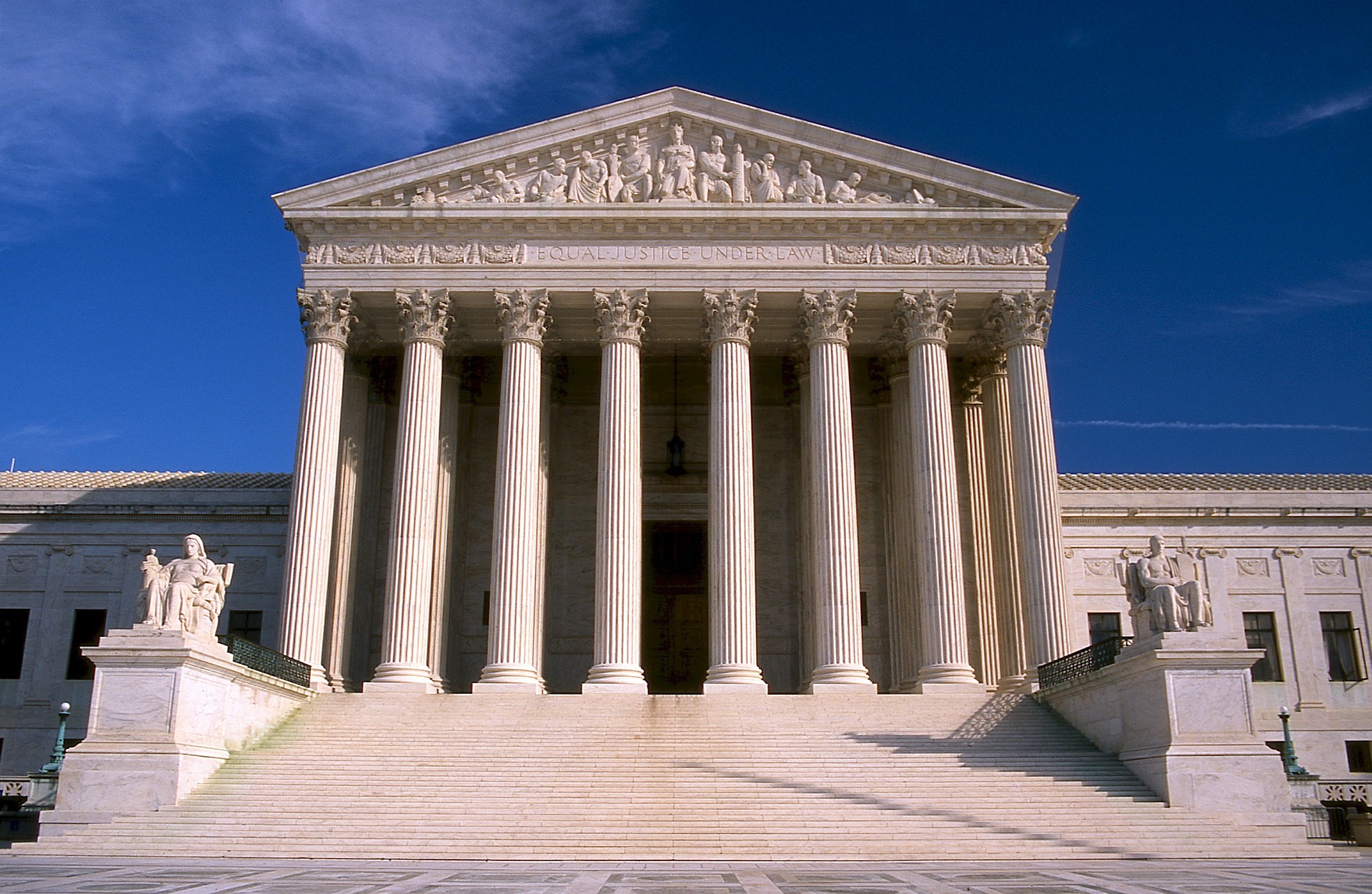
From the archive: the Supreme Court photo that accompanied the 2018 report.










3 Responses
[…] The slow dismantling of protectionist state statutes prohibiting interstate shipment of alcohol advances. The marathon started by Granholm has led to a host of cases demanding parity under commerce clause principles between in-state and out-of-state retailers. As we reported last week, one of those, a 6th Circuit challenge, will be heard in the Supreme Court …. […]
[…] briefs for Byrd v. Tennessee (now styled Tennessee Retailers v. Blair by SCOTUS) here, here, here, here, here, and […]
[…] briefs for Byrd v. Tennessee (now styled Tennessee Retailers v. Blair by SCOTUS) here, here, here, here, here, and […]