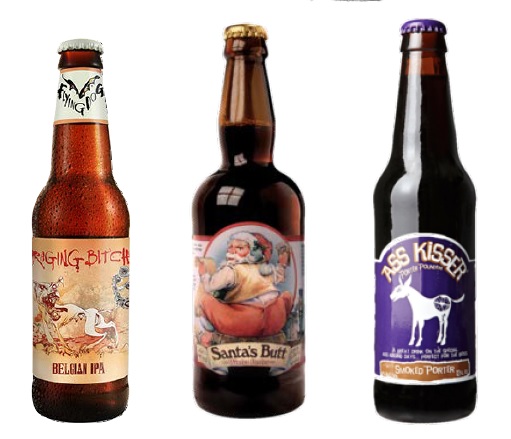
A frog gives you the finger. Santa sits on a beer barrel. A dog snarls from a label called Raging Bitch. Three state regulators objected. But a court telling New York it couldn’t ban the frog, Maine changing its mind about Santa, and an appeals court stripping Michigan officials of immunity are three different outcomes. That matters if you’re the brewer with labels already at the printer.
This look at beer labels follows our 2018 series on Coors’s fight to put alcohol content on beer labels and 44 Liquormart’s challenge to Rhode Island’s price-ad ban. Those cases put limits on how far governments can go to suppress truthful commercial speech. Here’s what happened when regulators objected to the artwork and words, not the numbers.
Bad Frog: New York lost on the ban, but the officials kept immunity
Federal regulators had approved the label. New York’s State Liquor Authority refused to register it. In Bad Frog Brewery v. New York State Liquor Authority, 134 F.3d 87 (2d Cir. 1998; No. 97-7949), the court treated the frog as commercial speech: the image identified a product and helped sell it, even if the brewery also meant to make a point. Under Central Hudson, shielding minors from vulgarity and promoting temperance counted as substantial interests. But New York hadn’t shown that banning the label would materially advance either goal or that a ban everywhere reasonably fit the aim of protecting children. Restrictions on where the product appeared in stores were one narrower option the court identified.


The Second Circuit sent the case back for an injunction against rejecting Bad Frog’s application, while leaving room for a narrower, lawful response. It also upheld qualified immunity for the commissioners on the federal damages claims. Bad Frog won relief from the ban, not a damages award.
Santa’s Butt: Maine backed down, and New York’s case went another way
A “butt” can mean a barrel. The fully clothed Santa on the porter label sat on one. In November 2006, the Maine Civil Liberties Union sued on Daniel Shelton’s behalf over the state’s refusals involving Santa’s Butt Winter Porter, Les Sans Culottes and Rosé de Gambrinus. Maine’s licensing supervisor told Shelton on December 22 that the Santa label could be registered. The MCLU’s January 2007 update reported that reversal but said it intended to keep pursuing the broader challenge. The agency’s change of mind wasn’t a court ruling on the merits, and I haven’t found a published merits ruling in the Maine case.


A separate New York dispute went to state court. New York approved six holiday labels after Shelton filed suit in November 2006. In Shelton v. New York State Liquor Authority, 61 A.D.3d 1145 (2009), the court found the application-denial claims moot and affirmed dismissal of the damages action in the Court of Claims. It allowed a separate tax-and-fee claim to proceed in the other action; it did not decide the alleged rejections violated the First Amendment.
Raging Bitch: Michigan approved the label, but the damages case went on
Michigan rejected Flying Dog’s label in 2009 under a former state rule and approved it in 2011. The later appeal concerned damages for the earlier denial. The Sixth Circuit in Flying Dog Brewery v. Michigan Liquor Control Commission, 597 F. App’x 342 (2015; No. 12-1984) reversed the grant of quasi-judicial and qualified immunity. Officials had fair notice that a content-based ban on protected commercial speech needed to satisfy Central Hudson. The majority sent the merits back to the district court; it didn’t find a violation or award damages. Judge Karen Nelson Moore would have found a violation, but that wasn’t the court’s holding. Michigan’s settlement report records a payment. For the details, see the full Flying Dog case timeline.


What to check before the label goes to print
Keep the exact artwork you submitted and get the agency’s reasons in writing. Federal approval and state registration are separate questions. For example, Maine’s current label law sets out a three-part obscenity test and a separate bar on labels that target minors, and 27 C.F.R. § 7.103 still addresses obscene or indecent material on malt beverage labels, containers and packaging. None of these three disputes invalidated that federal rule. For that question, see our look at what TTB can still reject.
From the 2018 archive: The original lead photograph shows Raging Bitch, Santa’s Butt and Ass Kisser bottles side by side.